Author name: dryogeshsisodia

Uncategorized

What Is Knee Arthritis and Why Does It Hurt?

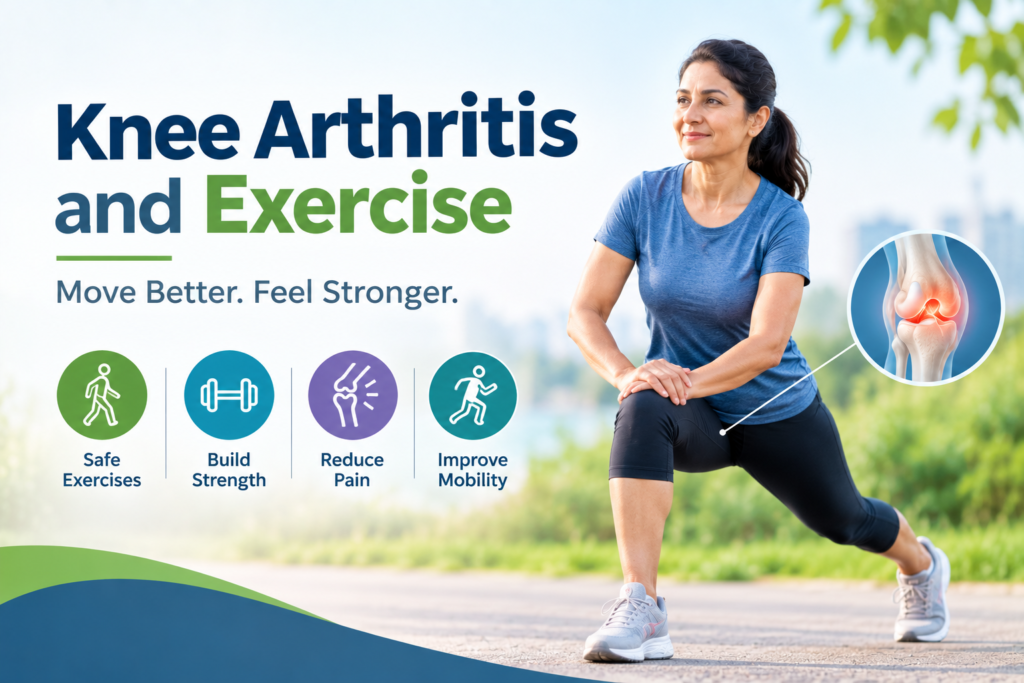
A Complete Guide to Understanding Knee Osteoarthritis If you have been told that you have “knee arthritis,” you may immediately wonder: “Is my cartilage completely worn out?” Or perhaps your X-ray report mentions: Severe osteoarthritis Joint-space narrowing Bone-on-bone changes And you may start worrying that knee replacement is inevitable. But there is an important point to understand: Knee arthritis is much more than simply worn-out cartilage. And the appearance of an X-ray does not always tell us how much pain a person will experience. Understanding what causes knee arthritis and why it hurts can help you make more informed decisions about treatment. What Exactly Is Knee Arthritis? Knee osteoarthritis (OA) is a condition in which the tissues of the knee gradually undergo structural and biological changes. For many years, arthritis was commonly described as simply “wear and tear” of the cartilage. Today, we understand that this is an oversimplification. Knee osteoarthritis can affect the whole joint, including: Articular cartilage Bone underneath the cartilage Synovial lining Meniscus Ligaments Muscles around the knee Other tissues surrounding the joint Several factors may contribute to the development and progression of osteoarthritis, including: Ageing Previous knee injuries Mechanical loading Body weight Joint alignment Muscle strength Inflammation Metabolic factors Individual biological factors This is why knee arthritis can look different and behave differently from one person to another. What Happens to Cartilage? Healthy articular cartilage provides a smooth, low-friction surface that allows the knee to move efficiently. With osteoarthritis, changes occur within the cartilage matrix. Over time, cartilage can become thinner and structurally altered. As osteoarthritis progresses, the space between the bones may appear narrower on an X-ray. This is known as joint-space narrowing. However, cartilage damage is only one part of osteoarthritis. Changes can also occur in the subchondral bone and synovium, along with other tissues surrounding the joint. These changes can contribute to symptoms such as pain, stiffness and reduced function. If Cartilage Doesn’t Feel Pain, Why Does Knee Arthritis Hurt? This is one of the most important things to understand about osteoarthritis. Articular cartilage itself does not have the typical nerve supply responsible for sensing pain. So where does the pain come from? Pain associated with knee osteoarthritis can arise from several other structures, including: Synovium Subchondral bone Joint capsule Periosteum Ligaments Surrounding soft tissues Inflammatory processes within the joint can also increase the sensitivity of pain-related nerve pathways. This can contribute to symptoms such as: Knee pain Stiffness Swelling Difficulty walking Difficulty climbing stairs Reduced physical activity Difficulty performing everyday activities This is one reason why treating knee arthritis requires looking beyond cartilage alone. Why Does My Knee Hurt More on Some Days? Knee arthritis symptoms can fluctuate. You may experience relatively comfortable days followed by periods when the knee feels more painful or stiff. Symptoms can be influenced by factors such as: Activity Level A sudden increase in walking, exercise or other physical activity may increase symptoms. Muscle Strength Reduced strength around the knee and hip can affect the physical demands placed on the joint. Joint Loading Different activities place different loads on the knee. Inflammation Changes within the joint can influence pain and stiffness. Sleep and General Health Poor sleep and overall health can influence how the body experiences and responds to pain. Previous Injury A history of knee injury can influence joint health and symptoms. Pain-System Factors Pain is a complex experience influenced by biological, physical and psychological factors. Therefore: Pain is not determined by cartilage damage alone. Does Severe Knee Arthritis Mean You Need a Knee Replacement? Not automatically. This is one of the most important points when discussing knee replacement in Pune or anywhere else. The decision to consider knee replacement should not be based solely on an X-ray report. Your orthopaedic evaluation should also consider: Your level of pain Walking ability Ability to climb stairs Ability to work Sleep disturbance Daily activities Exercise limitations Response to non-surgical treatment Overall health Expectations X-ray findings A person with severe-looking X-rays but minimal symptoms may not need surgery. Conversely, someone with significant pain and functional limitations may need to discuss surgical options even after appropriate non-surgical treatment. We don’t treat an X-ray alone. We treat the person behind the X-ray. Can Anything Be Done for Knee Arthritis? Yes. Having knee arthritis does not automatically mean that surgery is required. Treatment depends on the severity of the condition and, importantly, how much it is affecting your daily life. Depending on the individual situation, treatment may include: Exercise and Strengthening Progressive exercise can help improve strength, physical function and the ability to perform daily activities. Weight Management For people who are overweight or obese, appropriate weight management can reduce the physical demands placed on the knee and may improve symptoms and function. Physiotherapy A structured physiotherapy programme may help improve strength, mobility, function and confidence with movement. Activity Modification Temporarily modifying activities that significantly aggravate symptoms may be useful while maintaining appropriate physical activity. Walking Aids Selected patients may benefit from appropriate walking aids when necessary. Bracing Bracing may be considered in selected situations depending on symptoms and the pattern of arthritis. Medications Medications may be used when appropriate and should be selected based on the individual’s health and medical history. Injections Injections may be considered in selected patients depending on the clinical situation. Joint-Preserving Procedures Certain procedures may be appropriate for carefully selected patients. Knee Replacement When pain and functional limitations become substantial despite appropriate non-surgical management, knee replacement may be considered. Exercise and Strength: Why Are They Important? A common misconception is that someone with knee arthritis should avoid exercise completely. In many cases, appropriate exercise is an important part of managing osteoarthritis. Strengthening can help improve the capacity of the muscles around the knee and hip and support everyday movement. A programme may include exercises targeting: Quadriceps Hamstrings Gluteal muscles Calf muscles Hip muscles Overall lower-limb strength The exercises should be appropriately progressed according to the person’s symptoms, physical capacity and goals. If you are searching for

Uncategorized

Runners Knee Causes Symptoms Treatment

Runner’s Knee: C auses, Symptoms & Treatment of Patellofemoral Pain Running is one of the simplest and most effective ways to stay fit. But when pain starts developing around the front of your knee during running, climbing stairs or squatting, you may begin to wonder: “Is something wrong with my kneecap?” One common cause of this type of pain is patellofemoral pain, often referred to as runner’s knee. Patellofemoral pain is generally felt around or behind the kneecap and can become worse during activities that load the knee while it is bent, such as running, squatting and climbing stairs. For runners dealing with persistent knee pain while running, understanding the cause and managing training appropriately can be an important part of recovery. What Is a Runner’s Knee? “Runner’s knee” is a commonly used term for patellofemoral pain. The pain is usually felt around or behind the patella (kneecap) and may become noticeable during: Running Going up or down stairs Squatting Jumping Prolonged periods of knee bending Importantly, runner’s knee does not automatically mean that the cartilage underneath the kneecap is damaged. The term patellofemoral pain is generally preferred rather than automatically describing every case as chondromalacia. Why Do Runners Develop Knee Pain? There is rarely one single explanation that applies to every runner. Patellofemoral pain can be influenced by the interaction between the runner, training load and physical capacity. Understanding these factors is important for running injury prevention and effective rehabilitation. 1. Sudden Changes in Training One common factor is a sudden increase in running demands. For example, you may have suddenly increased: Running distance Number of running days Speed work Hill running Long-run duration Overall training intensity Your body needs time to adapt to changes in physical loading. If training demands increase faster than your current capacity, symptoms may develop or become aggravated. This is why gradual progression is an important part of managing runner knee pain. 2. Physical Capacity Running repeatedly places demands on the muscles and joints of the lower limb. Your ability to tolerate these demands can be influenced by: Strength Conditioning Previous injuries Training history Recovery Current workload Exercise-based management is an important component of evidence-based treatment for patellofemoral pain. A rehabilitation programme may therefore focus on gradually developing the physical capacity required for your individual running demands. 3. Running Demands Every runner has a different combination of: Running speed Stride characteristics Cadence Training volume Strength Running experience Previous injury history This means there is no single running technique that guarantees protection from runner’s knee. Instead of immediately blaming your footwear, foot strike or running form, it is more useful to look at the whole runner. What Does a Runner’s Knee Feel Like? Typical symptoms of patellofemoral pain can include discomfort: Around or behind the kneecap During running While climbing stairs During squats During jumping After prolonged periods of knee bending The defining feature is generally pain around or behind the patella that is aggravated by activities that load the patellofemoral joint. However, not every type of pain at the front of the knee is necessarily runner’s knee. That is why persistent or unusual symptoms should be properly assessed. Should You Stop Running? Not every runner with patellofemoral pain needs to permanently stop running. The appropriate approach depends on several factors, including: Severity of symptoms Training load Irritability of the condition Current physical capacity Running goals Functional requirements In some situations, temporarily modifying running may be appropriate. This could mean reducing running volume or intensity before progressively building back toward normal training. The objective isn’t simply: “Stop running.” The objective is: “Build the capacity to run comfortably again.” What About Strength Training? Strength training is an important component of managing patellofemoral pain. Depending on the individual, a rehabilitation programme may include exercises targeting: Quadriceps Hip muscles Gluteal muscles Lower-limb strength and control Hip- and knee-targeted exercise commonly forms an important foundation of rehabilitation for patellofemoral pain. However, there is no single exercise programme that is perfect for every runner. The exercises, intensity and progression should be individualized according to the runner’s symptoms, physical capacity and goals. This is particularly important when seeking knee pain treatment in Pune, where runners may have very different training backgrounds and sporting demands. Can Running Form Cause Runner’s Knee? This is where runners can sometimes become confused. There is no single “perfect” running technique that applies to everyone. Your running mechanics are influenced by multiple factors, including: Cadence Stride characteristics Strength Mobility Running speed Training load Individual biomechanics Changing cadence or stride may be useful for selected runners, but it should not be done simply because someone says: “Your running form is wrong.” A proper assessment should consider: Training Load + Strength + Running Capacity + Symptoms + Goals Rather than focusing on one movement or one number, the aim should be to understand why the runner is experiencing symptoms and what changes may help. How Can You Manage a Runner’s Knee? Managing patellofemoral pain often involves more than simply resting the knee. A comprehensive approach may include: 1. Managing Training Load Temporarily modifying running volume, intensity or frequency may help reduce excessive stress while symptoms settle. 2. Building Strength Progressive strengthening can help develop the capacity required for running. 3. Gradual Return to Running Once symptoms are appropriately controlled, running can be progressively reintroduced according to individual tolerance. 4. Addressing Contributing Factors Depending on the runner, this may involve considering strength, running mechanics, recovery, training history and other relevant factors. 5. Monitoring Symptoms Your response to training can provide useful information about whether your current running load is appropriate. The goal is not simply to eliminate pain temporarily. It is to help the runner return to consistent and sustainable running. When Should You See a Sports Orthopaedic Specialist? Consider getting assessed if: Knee pain persists Pain is progressively worsening You cannot run normally Pain interferes with daily activities There is significant swelling The knee locks or gives way You have experienced significant trauma Symptoms do not improve despite

Uncategorized

Football Deceleration Why Footballers Need To Learn How To Stop

Why Does a Footballer Need to Learn How to Stop? Understanding Deceleration in Football When we talk about football performance, we often focus on speed, acceleration and sprinting. But there is another skill that is just as important—and often overlooked: Deceleration: the ability to slow down and control your body. A footballer may sprint toward the ball, suddenly slow down, change direction and accelerate again, sometimes within just a few seconds. This means that being a fast footballer isn’t enough. A player also needs the ability to control that speed effectively. Deceleration is an important part of football agility and involves a combination of speed control, balance, strength, power, technique, proprioception and neuromuscular coordination. What Happens When a Footballer Decelerates? Imagine this sequence during a match: SPRINT → BRAKE → CONTROL → CHANGE DIRECTION → ACCELERATE AGAIN When a player slows down rapidly, the body needs to absorb and control the forces generated by the movement. This requires coordinated action from the muscles and nervous system, together with appropriate balance and body positioning. Therefore, deceleration is not simply “stopping.” It is a highly coordinated athletic skill. A footballer needs to control their body while managing forces and preparing for whatever movement comes next. Why Is Deceleration Important in Football? 1. Deceleration Helps You Change Direction A player cannot change direction effectively without first controlling their speed. Imagine a winger sprinting down the field before suddenly cutting inside. The player needs to reduce speed, control their body position and then accelerate in the new direction. Strength, power, balance and technique all contribute to this ability. Good deceleration in football therefore forms an important part of effective change-of-direction movement. 2. It Helps You Control Your Body Effective deceleration allows a player to maintain balance and body position while absorbing the forces created by rapid movement. This becomes particularly important during: Sprinting Cutting Defensive movements Chasing an opponent Pressing Recovering position Controlling the ball at speed A player who can control their body effectively has a better opportunity to transition smoothly into the next movement. Deceleration Is a Key Part of Football Agility Agility is much more than running quickly around cones. Modern sports-science definitions describe agility as rapid movement involving a change in speed or direction in response to a stimulus. This means agility involves both physical and perceptual components. During a real football match, the player doesn’t always know exactly when or where they will need to stop. They have to: SEE → DECIDE → BRAKE → REPOSITION → ACCELERATE For example, a defender may need to react to an opponent suddenly changing direction. The player must recognize the movement, decide how to respond, control their speed and then reposition themselves. This makes football agility training more complex than simply practicing predetermined movements. What Helps a Footballer Decelerate Better? Several physical qualities contribute to effective deceleration. 1. Strength Adequate lower-limb strength helps an athlete produce and control force. Developing strength can support the physical demands associated with sprinting, braking and changing direction. Strength training is therefore an important component of football performance preparation.  2. Eccentric Strength Deceleration places significant demands on the muscles as they control force while lengthening under load. This makes eccentric strength particularly relevant to braking and change-of-direction movements. Developing the ability to control force eccentrically can help prepare the athlete for movements that require rapid reduction in speed.  3. Balance A footballer needs to maintain stability while slowing down and repositioning their body. Good balance can help the player maintain control during challenging movements and prepare for the next action. Neuromuscular and balance training can therefore be useful components of a well-rounded football conditioning programme. 4. Neuromuscular Control The brain, nervous system and muscles need to coordinate rapidly during deceleration. This becomes particularly important when a player has to respond to an unpredictable opponent, teammate or ball movement. The better the athlete can coordinate these actions, the more effectively they can control movement. 5. Technique Technique also plays an important role in deceleration. Important considerations can include: Body position Foot placement Trunk control Lower-limb alignment Centre-of-mass control Ability to absorb and redirect force Effective movement isn’t simply about producing more force. It’s about producing and controlling force at the right time. Deceleration and Injury Prevention Deceleration should not be presented as a guarantee against injury. Football injuries are multifactorial, and no single exercise, technique or physical quality can eliminate injury risk. However, neuromuscular training programmes incorporating elements such as: Strength Balance Plyometrics Coordination Speed Agility have been studied for both injury prevention and performance enhancement. This is particularly relevant because football places repeated demands on the lower extremities. The objective is therefore not simply to make an athlete faster. The objective is to develop an athlete who can control that speed. ACCELERATE → DECELERATE → CONTROL → CHANGE DIRECTION → ACCELERATE AGAIN This is an important principle of football injury prevention and performance development. How Should Footballers Train Deceleration? Deceleration should be trained progressively. It isn’t simply a matter of asking an athlete to perform repeated maximal stops from high speed. A well-designed programme can gradually progress through different levels of movement control. A possible progression: Basic braking mechanics ↓ Controlled deceleration ↓ Single-leg control ↓ Change-of-direction drills ↓ Reactive deceleration ↓ Football-specific situations Each stage can introduce additional physical or perceptual demands. The exact progression should depend on factors such as: Player’s age Training experience Playing position Physical capacity Previous injury history Current training load Stage of the season A young developing athlete may require a different approach from an experienced competitive footballer. Similarly, an athlete returning from injury may need a carefully controlled progression before performing high-speed reactive deceleration. Why Should Deceleration Be Trained Alongside Speed? Speed and deceleration should not be treated as completely separate abilities. A footballer may be able to accelerate extremely quickly, but if they cannot control that speed, their ability to perform the next action can be compromised. Think about a player chasing a through ball. They need to:

Uncategorized

Running Cadence 180 Steps Per Minute

If you have ever used a running watch or fitness app, you have probably noticed a number called running cadence. You may also have heard one of the most common pieces of advice in running: “A good runner should have a cadence of 180 steps per minute.” But is 180 steps per minute really the ideal cadence for every runner? No. Running cadence is an important part of running technique, but there is no single cadence that is perfect for everyone. Your preferred cadence can vary depending on your running speed, body characteristics, experience, technique and individual biomechanics. Understanding your own running pattern is much more useful than simply trying to reach an arbitrary number on your smartwatch. What Is Running Cadence? Running cadence is the number of steps a runner takes per minute. For example: 160 steps/minute = 160 steps in one minute 170 steps/minute = 170 steps in one minute 180 steps/minute = 180 steps in one minute Most modern GPS running watches and fitness apps can automatically measure cadence. It is a useful metric for understanding your running pattern, but it should not be used alone to judge whether your running technique is good or bad. Is 180 Steps Per Minute the Ideal Running Cadence? This is one of the most common myths in recreational running. The number 180 became popular partly because observations of elite runners have shown relatively high step rates, particularly during faster running. But there is an important distinction: Elite runners often have high cadence. That does not mean: Every runner should force their cadence to 180 steps per minute. Cadence naturally changes with running speed. When you run faster, your step rate generally increases, but other aspects of your stride also change. Therefore, if your natural cadence during an easy run is 160–170 steps per minute, there is no automatic reason to force yourself to 180. Your ideal running cadence is not necessarily the number that matches an elite athlete. What Determines Running Cadence? Several factors influence a runner’s natural cadence. 1. Running Speed Cadence generally changes according to running speed. Your cadence during an easy recovery run may be different from your cadence during a tempo run, interval session or sprint. Therefore, comparing cadence across completely different types of running can be misleading. 2. Height and Leg Length Body dimensions can influence natural running mechanics. Runners with different heights and leg lengths may naturally adopt different combinations of step rate and stride length. This is another reason why copying another runner’s cadence isn’t necessarily appropriate. 3. Running Technique Posture, stride characteristics and foot-ground interaction can influence cadence. A change in cadence may also cause changes elsewhere in the running pattern. This is why running technique should be assessed as a whole rather than focusing on one number. 4. Strength and Conditioning Strength and conditioning can influence how effectively a runner produces and controls force. Good physical preparation may help a runner tolerate running loads and maintain efficient movement as fatigue develops. 5. Running Experience Beginners and experienced runners may develop different movement strategies over time. As runners become more familiar with running, their technique and cadence may naturally change with training. 6. Individual Biomechanics Every runner has a slightly different movement pattern. Factors such as body structure, mobility, strength, previous injuries and running experience can all contribute to individual differences. There is therefore no universal cadence that should be imposed on every runner. Why Does Running Cadence Matter? Cadence is closely connected with stride characteristics and ground-contact mechanics. When cadence changes, other parts of the running pattern can change as well. For some runners, a modest increase in cadence may: Reduce excessive overstriding Change stride characteristics Alter ground-contact mechanics Influence mechanical loading However, these effects are individual. That means increasing cadence is not automatically beneficial for everyone. The goal should not be to increase cadence simply because a particular number is considered “ideal.” Instead, cadence should be considered as one part of the overall running pattern. Can Increasing Cadence Reduce Running Injury Risk? This is one of the main reasons runners become interested in cadence. Some runners may benefit from a modest cadence adjustment when addressing a specific movement or loading issue. However, it is important not to oversimplify the relationship between cadence and injury. Higher cadence does not automatically mean lower injury risk. Running injuries are multifactorial. Other factors can include: Training load Strength Recovery Footwear Running mechanics Previous injuries Sudden increases in running volume Sudden increases in training intensity Therefore, cadence should be considered as one part of running injury prevention, rather than a standalone solution. The Common Mistake: Chasing 180 Imagine your natural cadence during an easy run is 165 steps per minute. You suddenly decide: “I need to reach 180.” You increase your step rate dramatically and try to maintain it throughout the run. Instead of making your running better, the change may make your running feel: Unnatural Uncomfortable Fatiguing Difficult to maintain Less relaxed You may also become so focused on the number that you lose the natural rhythm of your running. Don’t let your smartwatch become your running coach. Your data is useful, but it needs context. A number on a watch cannot tell you everything about your running technique, physical capacity or injury risk. Should You Increase Your Cadence? Sometimes—but not automatically. If a runner has a specific technical or loading issue, a sports physiotherapist, running coach or sports medicine professional may consider a cadence modification as part of a broader intervention. The key principle is: Make Small, Gradual Changes If a cadence adjustment is appropriate, avoid suddenly making a large change. Your body needs time to adapt to changes in running mechanics and loading. Instead of trying to jump from 165 to 180 steps per minute overnight, any modification should be introduced progressively and monitored according to how the runner responds. How Can You Improve Running Efficiency? Rather than obsessing over one number, focus on the bigger picture. 1. Develop Good Running

Uncategorized

Why Does a Footballer Need Stamina? Understanding Football Fitness and Performance

Football is not simply a 90-minute running sport. A footballer needs to repeatedly run, sprint, accelerate, stop, change direction and recover throughout a match. Unlike long-distance running, football requires players to switch continuously between low-, moderate- and high-intensity activities. A player may sprint to win the ball, slow down to reposition, accelerate again, and then repeat the sequence several times. This is why stamina is an important component of football performance. But football stamina is not simply about being able to run for a long time. It is also about the ability to recover between intense efforts and continue performing effectively as the match progresses. What Does Stamina Actually Do for a Footballer? Think of the aerobic system as the body’s engine. Good aerobic fitness helps a footballer: Maintain activity throughout the match Recover between high-intensity efforts Repeat demanding actions Delay the effects of fatigue Maintain performance as the game progresses A footballer with good aerobic fitness may be better prepared to recover between demanding actions and continue contributing late in the game. However, stamina should not be confused with simply being able to run long distances. Football Stamina Is Different From Long-Distance Running A footballer may have excellent long-distance running ability but still struggle to repeatedly: Sprint Accelerate Decelerate Change direction Jump Press opponents Recover quickly between intense efforts Football is an intermittent sport. The physical demands constantly change according to the situation on the field. A typical sequence may look like: SPRINT → RECOVER → ACCELERATE → RECOVER → SPRINT AGAIN Therefore, football endurance needs to support repeated high-intensity actions rather than only continuous running. Why Is Aerobic Fitness Important in Football? During a football match, players repeatedly perform demanding actions with periods of lower-intensity activity in between. The aerobic system plays an important role in helping the player sustain activity and recover between these efforts. As fatigue develops, maintaining high-intensity performance can become increasingly difficult. This is particularly important during demanding periods of a match, when a player’s ability to repeat intense actions can influence their performance. Good aerobic fitness can therefore support: 1. Recovery Between Sprints After a high-intensity sprint, a footballer needs to recover before performing another demanding action. Better aerobic fitness can support this recovery process. 2. Repeated High-Intensity Efforts Footballers rarely perform just one sprint during a match. They may need to repeat sprints, accelerations and changes of direction throughout the game. 3. Maintaining Performance Fatigue can affect a player’s ability to perform effectively as the match progresses. A well-developed fitness base can help a player continue working and performing when the game becomes physically demanding. Why Football Stamina Is About Repeated Performance Consider a typical match situation: SPRINT → RECOVER → SPRINT → RECOVER → SPRINT AGAIN This repeated-effort ability is one of the key differences between football fitness and traditional endurance activities. A footballer doesn’t simply need to cover distance. They need to be able to perform the right action at the right time—even after repeated physical demands. For example, a midfielder may need to: Sprint forward during an attack. Recover while the opposition has possession. Accelerate to close down an opponent. Change direction. Sprint again to support the next phase of play. This cycle can occur repeatedly during a match. How Should a Footballer Train Stamina? Football endurance training should ultimately become football-specific. Depending on the player’s age, position, fitness level, training history and competition schedule, conditioning may include: High-Intensity Aerobic Intervals Intervals can be used to develop the ability to repeatedly work at higher intensities with controlled recovery periods. Intermittent Running Intermittent running reflects the changing intensity demands that are common in football. Shuttle Running Shuttle-based exercises can combine running with acceleration, deceleration and changes of direction. Speed-Endurance Training Speed-endurance work can help players develop the ability to maintain high-intensity efforts repeatedly. Small-Sided Games Small-sided games can provide a more football-specific conditioning environment while incorporating technical and tactical elements. Sport-Specific Conditioning Conditioning should reflect the actual demands of the player’s position and playing style wherever appropriate. Should Footballers Just Run More? Not necessarily. The goal of stamina training isn’t simply to make a footballer run more kilometres. A footballer’s conditioning program should be designed around the demands of their sport. Factors such as: Age Playing position Current fitness Training level Previous training load Competition schedule Recovery Individual goals can influence how conditioning should be structured. A central midfielder, winger, defender and goalkeeper may not require exactly the same physical preparation. The objective is to develop the physical capacity needed to perform effectively throughout the match. Stamina and Football Performance: What Happens When Fatigue Sets In? As fatigue develops, maintaining high-intensity activity can become more challenging. A player may find it harder to: Repeat sprints Accelerate quickly Track an opponent Recover after intense efforts Press effectively Make repeated runs Maintain physical intensity late in the match This is why football fitness is closely connected to performance. Stamina isn’t only about surviving the final minutes of a game. It is about helping the footballer remain capable of performing the actions the game demands. Building a Footballer’s “Engine” A useful way to think about football conditioning is to imagine the player as having an engine. Technical skills determine what the player can do with the ball. Tactical understanding determines where and when the player should act. Physical fitness helps determine whether the player can continue performing those actions effectively throughout the match. A well-developed aerobic system can support the player’s ability to recover between demanding efforts and maintain activity over the course of the game. But the best conditioning program isn’t necessarily the one with the most running. It is the one that appropriately prepares the player for the specific demands of football. When Should Football Stamina Training Be Individualized? Not every footballer should follow the same conditioning program. Training should take into account: Age and development Playing position Current fitness level Training history Match frequency Competition schedule Recovery status Individual performance goals For example, a young developing player may require

Uncategorized

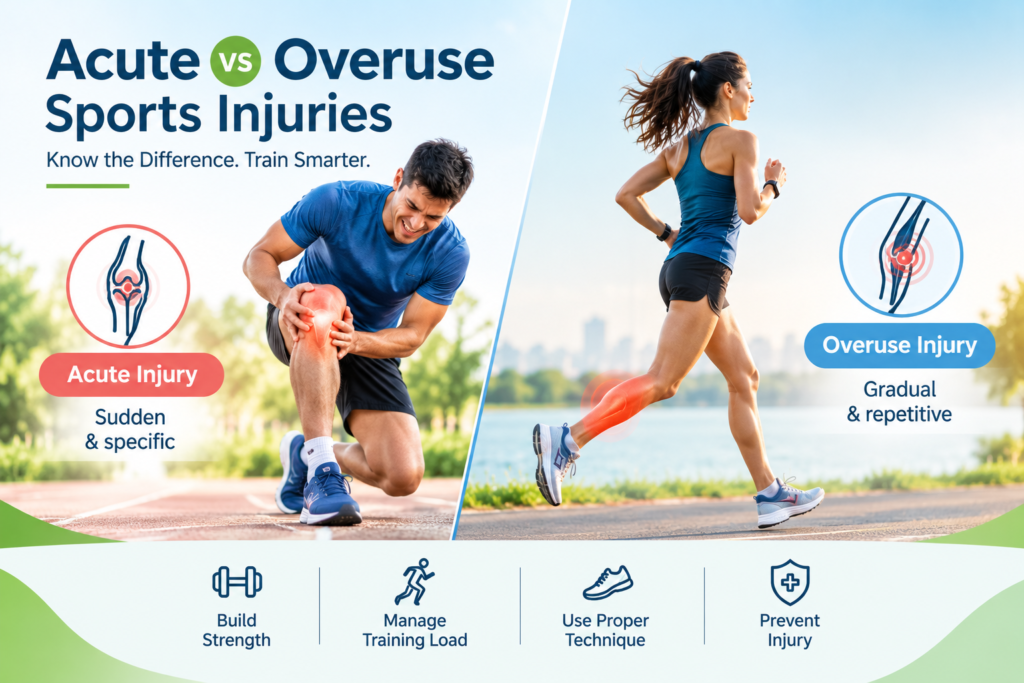
Why Does Training Cause Injury? Understanding Training Load, Tissue Capacity and Recovery

Training is essential for improving athletic performance. It helps build strength, endurance, coordination, power and sport-specific fitness. However, athletes can sometimes develop pain or injuries during training—even when exercise is part of a healthy and well-planned routine. So, why does training cause injury? The answer is not simply that an athlete is “training too much.” Injury risk is influenced by the relationship between training load, tissue capacity, recovery, adaptation and the individual athlete’s circumstances. Understanding this relationship is an important part of sports injury prevention and safe performance progression. What Is Training Load? Training load refers to the overall physical stress placed on the body during training and competition. It can include: Running Sprinting Jumping Strength training Throwing Change-of-direction drills Skill-based training Matches and competitions Training load isn’t determined only by how long an athlete exercises. The overall demand can also be influenced by volume, intensity, frequency and duration. For example, running 5 kilometres at a comfortable pace creates a very different physical stimulus from running the same distance with repeated maximal sprints. This is why training load and injury need to be considered in context rather than judged by exercise duration alone. Your Body Has a Limited Current Capacity Every athlete has a current level of physical capacity—the amount of stress their body is prepared to tolerate at a particular time. This includes the ability of: Muscles to produce and tolerate force Tendons to tolerate repeated loading Bones to tolerate impact Joints to tolerate movement The cardiovascular system to tolerate exercise The nervous system to coordinate movement The body to recover between training sessions Importantly, this capacity isn’t fixed. With appropriate training and recovery, the body can gradually adapt and become stronger. However, different tissues and physical qualities adapt at different rates, so increasing training demands too quickly can create problems. Training Load vs. Tissue Capacity A useful way to understand training-related injury is to compare what you ask the body to do with what the body is currently prepared to tolerate. When training is appropriately matched to capacity: Training Load ≤ Current Capacity The body can adapt to the stimulus and gradually become better prepared for future demands. When training demands suddenly exceed capacity: Training Load > Current Capacity The tissues and physical systems may be exposed to excessive stress, potentially increasing injury risk. However, this should not be treated as a simple mathematical formula that predicts exactly who will get injured. Sports injuries are complex and can be influenced by multiple factors. Why Can the Same Workout Affect Two Athletes Differently? Imagine two football players completing exactly the same training session. Athlete A Has trained consistently Has good strength and conditioning Is accustomed to the training demands Has adequate recovery Athlete B Has recently returned from an injury Has had several weeks of reduced training Has lower conditioning Is fatigued Is suddenly exposed to high-intensity training Although both athletes experience the same external training load, their ability to tolerate that load may be completely different. This is why there isn’t one universal amount of training that can be considered “safe” or “unsafe” for every athlete. Training history, fitness, previous injuries, fatigue, recovery and the demands of the sport all matter. How Sudden Changes in Training Can Increase Injury Risk One of the most important principles in sports injury prevention is appropriate progression. Sometimes the problem isn’t the absolute amount of training. The bigger issue may be how quickly the athlete reached that level. Consider an athlete running: Week 1: 10 km Week 2: 12 km Week 3: 14 km This represents a gradual progression. Now compare that with: 10 km → 25 km in one week That represents a substantially different training demand and may be difficult for an athlete who hasn’t developed the capacity to tolerate it. The same principle applies to sudden increases in sprinting, jumping, strength training, match exposure or high-intensity sessions. Is there a perfect percentage increase? No single percentage can guarantee injury prevention for every athlete. Training progression needs to consider the individual’s current capacity, training history, recovery, sport and overall circumstances rather than relying on a rigid formula. Recovery Is Part of Training Recovery is sometimes treated as time away from training. In reality, recovery is an essential part of the training process. Training provides the stimulus. Recovery provides the opportunity for adaptation. The basic process can be thought of as: TRAIN → RECOVER → ADAPT → PROGRESS Rather than: TRAIN → TRAIN → TRAIN → BREAK DOWN Repeatedly increasing training stress without adequate recovery can create problems. Training errors can include neglecting recovery, increasing demands too quickly, returning too rapidly after illness or injury, excessive high-volume or high-intensity training, and insufficient recovery between demanding sessions. Why More Training Isn’t Always Better Training generally produces beneficial adaptations, but increasing training indefinitely does not necessarily produce better results. At a certain point, additional training may provide diminishing returns, particularly when recovery is insufficient. The goal shouldn’t be: “Train as much as possible.” Instead, the goal should be: “Apply the amount of training that produces the desired adaptation while allowing adequate recovery.” This becomes particularly important for athletes training at high levels, where the difference between sufficient training and excessive training can become relatively small. Training Load and Injury During Return to Sport The relationship between training load and tissue capacity becomes particularly important after an injury. An athlete may feel pain-free, but being pain-free doesn’t necessarily mean the body has regained the capacity required for high-level sport. For example, a football player returning after injury may need to progress through: Walking → Jogging → Running → Sprinting → Cutting → Jumping → Football Drills → Training → Competition Each stage increases the physical demands placed on the body. A structured return to sport process allows the athlete to gradually bridge the gap between their current capacity and the demands of their sport. This is an important component of sports injury rehabilitation. 5 Ways to Reduce Training-Related Injury Risk There is no

Uncategorized

Shoulder Labrum Tear & Arthroscopy – A Minimally Invasive Solution

Introduction Shoulder pain that refuses to go away can be more than just muscle strain. For athletes, gym-goers, and even working professionals, a shoulder labrum tear is a common cause of persistent pain and clicking sounds. Fortunately, modern shoulder arthroscopy (keyhole surgery) offers a safe, minimally invasive solution with faster recovery. — 🦴 What is a Shoulder Labrum Tear? The labrum is a ring of cartilage that stabilizes the shoulder joint. A tear may occur due to: Sports injuries (throwing, tackling, falls) Heavy weightlifting Repeated overhead activity (swimming, tennis) Shoulder dislocation   — 📍 Symptoms of Labrum Tear Deep shoulder pain, especially with overhead activity Clicking, popping, or catching sensation Weakness in the arm Shoulder instability or frequent dislocations   — 🔍 Diagnosis An orthopaedic exam, MRI, and sometimes arthroscopy are used to confirm the tear. — ⚡ Shoulder Arthroscopy – The Modern Treatment Arthroscopy = Keyhole Surgery. 👉 Tiny incisions, a small camera, and specialized instruments repair the labrum without large cuts. Benefits: ✅ Small scars ✅ Less pain ✅ Faster recovery ✅ Quick return to sports & daily activity   — 🏋️ Recovery & Rehab Sling for 2–3 weeks Guided physiotherapy for 6–12 weeks Gradual return to sports in 3–6 months (depending on tear severity)   — 🧠 Prevention Tips Warm up before workouts Avoid lifting beyond capacity Strengthen rotator cuff & shoulder stabilizers Maintain good posture   — ✅ Conclusion Shoulder labrum tears can severely limit performance and daily activity. But with shoulder arthroscopy, patients enjoy quick relief and long-term stability.

Uncategorized

NUTRITION TIP OF THE WEEK IRON FOR WOMEN’S ENERGY & HEALTH

Introduction Do you often feel tired, dizzy, or unable to focus? For many women, this isn’t just stress — it’s iron deficiency anemia, one of the most common nutrition problems worldwide. Iron is more than a blood nutrient — it’s essential for energy, brain function, and joint health. — 💡 Why Women Need More Iron Blood Loss: Monthly menstrual cycles increase iron demand. Pregnancy & Lactation: Higher needs during motherhood. Active Lifestyle: Athletes and working women burn through iron stores faster. Without enough iron, the body cannot produce hemoglobin, which carries oxygen. Result → fatigue, low immunity, brittle hair, and joint weakness. — 🌟 Benefits of Iron for Women 1. Boosts Energy & Focus – Oxygen supply to muscles & brain improves. 2. Prevents Anemia – Reduces fatigue, weakness, dizziness. 3. Supports Joints & Bones – Helps maintain muscle and bone metabolism. 4. Healthy Pregnancy – Essential for mother & baby’s growth.   — 🥗 Best Iron-Rich Foods Vegetarian: Spinach, kale, pumpkin seeds, ragi, beans, jaggery. Non-vegetarian: Eggs, chicken, fish, liver. Vitamin C combo: Oranges, amla, lemon (help absorb iron better).   — ⚠️ Signs of Deficiency Pale skin Tiredness despite rest Hair loss / brittle nails Frequent headaches   — ✅ Pro Tips Use iron cookware – it increases iron content in food. Avoid tea/coffee with meals – they reduce absorption. Combine dal + rice or roti + palak for complete nutrition.   — 🌐 Why It Matters for Joint Health Weak, fatigued muscles can’t support your joints effectively → leading to back, knee, and shoulder strain. Keeping iron levels balanced = stronger muscles + healthier joints. — 🏥 Conclusion Iron isn’t just about blood — it’s about energy, strength, and independence. Every woman deserves to feel strong, active, and pain-free. 👉 Ask yourself today: Am I getting enough iron? — Call to Action: For a personalized nutrition & joint wellness program, consult Dr. Yogesh Sisodia at Preserve The Joints – Arthritis & Sports Injury Center, NIBM Pune. 🌐 dryogeshsisodia.com/ | 📱 +91 7387393683

Uncategorized

Fuel for Your Brain, Heart & Joints

Fuel for Your Brain, Heart & Joints Omega-3 fatty acids are called essential fats because your body cannot produce them on its own. They play a powerful role in both fitness and overall wellness. 👉 Top Benefits: Brain Health: Improves memory, focus, and reduces brain fog 🧠 Heart Health: Lowers risk of heart disease and supports circulation 💙 Joint Support: Reduces inflammation and eases stiffness 🦵 Muscle Recovery: Helps reduce soreness after workouts 💪 👉 Sources of Omega-3: Food: Fatty fish (salmon, mackerel, sardines), walnuts, chia seeds, flaxseeds. Supplements: Omega-3 capsules, but always take them on a doctor’s advice. 👉 Fitness Connection: Athletes and active adults often benefit from Omega-3 because it aids muscle recovery and protects joints from wear and tear. ⚡ Add Omega-3 foods to your weekly diet and feel the difference in energy, focus, and recovery! 📍 Join us at PSIPP Sports & Fitness Center, NIBM Pune 📍 Google Maps Location —

Uncategorized

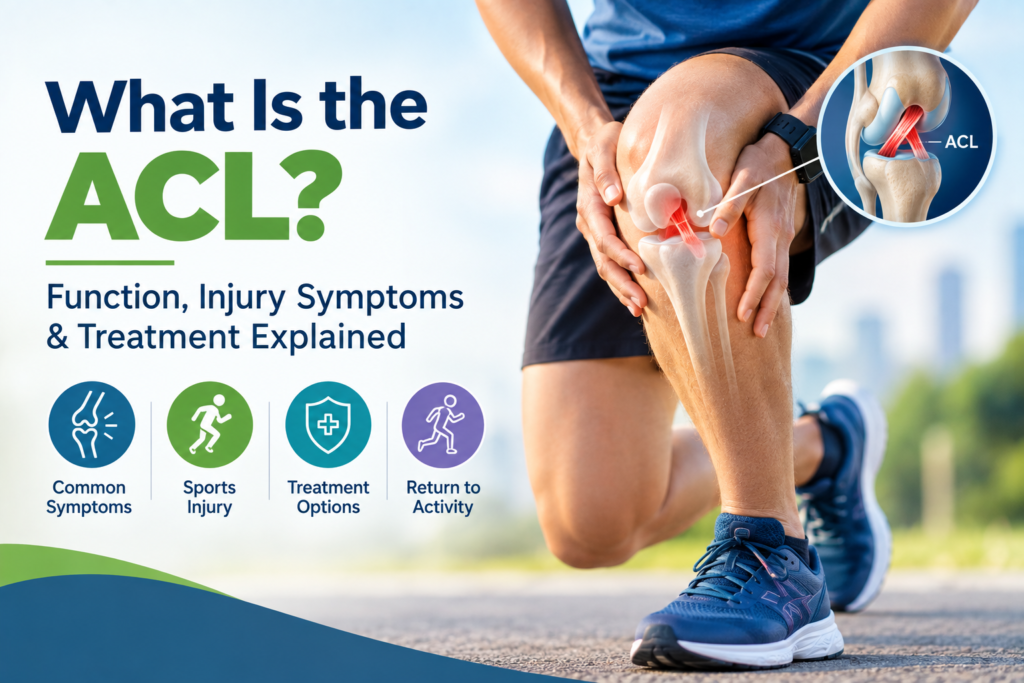
ACL Injuries in Athletes – Prevention is Better than Surgery

For young athletes, nothing is more frustrating than a sudden knee injury. One of the most common and serious sports injuries is an ACL tear (Anterior Cruciate Ligament). It can sideline a player for months and sometimes requires surgery. The good news? With the right training and awareness, most ACL injuries are preventable. — Why ACL Injuries Happen: Sudden twists, turns, or pivots (common in football, basketball, martial arts). Landing incorrectly after a jump. Weak thigh & hip muscles. Poor warm-up or training technique.   — Prevention Strategies: 1. Strength Training 💪 Focus on quadriceps, hamstrings, and glutes. Squats, lunges, and resistance band exercises build knee stability.   2. Neuromuscular Training 🧠 Practice safe landing techniques. Train agility, balance, and reaction drills.   3. Flexibility & Mobility 🧘 Stretch hamstrings, calves, and hips regularly. Add yoga or Pilates for joint-friendly flexibility.   4. Sport-Specific Drills ⚽🏀 Learn correct cutting and pivoting techniques. Warm up before and cool down after practice.     — When to Seek Help: If you hear a pop in your knee, followed by swelling and instability — consult an orthopaedic sports specialist immediately. Early diagnosis = better recovery. — Pro Tip for Athletes: Preventing ACL injuries not only saves you from surgery but also keeps you game-ready, season after season. — Conclusion: Strong legs + Safe landings = Healthy knees. Every athlete should train smart, not just hard. Prevention is the real victory! 🏆 — Call to Action: For an ACL prevention & sports fitness program, book your consultation with Dr. Yogesh Sisodia at Preserve The Joints – Arthritis & Sports Injury Center, NIBM Pune. 🌐 dryogeshsisodia.com/ | 📱 +91 7387393683

Scroll to Top