
Have you ever experienced knee pain while climbing stairs, stiffness when getting out of bed, or discomfort after walking for a long time? Perhaps you have started avoiding your favourite morning walk because your joints no longer feel as comfortable as they once did.
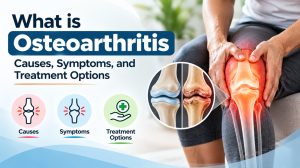
These everyday experiences may seem like a normal part of getting older. However, persistent joint pain and stiffness can sometimes indicate a condition called osteoarthritis (OA).
Osteoarthritis is one of the most common joint conditions, affecting the cartilage and other structures that help joints move smoothly. It frequently affects the knees, hips, hands, and spine. Although it is more common with increasing age, younger adults can also develop it, particularly following joint injuries or because of other risk factors.
The good news is that osteoarthritis does not automatically mean you must stop exercising, give up your favourite activities, or undergo surgery. With an appropriate diagnosis, regular exercise, lifestyle adjustments, and the right treatment, many people can manage their symptoms and maintain an active lifestyle.
What Is Osteoarthritis?
Osteoarthritis is a long-term joint condition in which the protective cartilage that covers the ends of bones gradually changes and deteriorates. Cartilage helps bones move against each other with minimal friction.
A healthy joint also depends on the surrounding muscles, ligaments, joint lining, and other tissues. Osteoarthritis can affect these structures as well, sometimes leading to inflammation, stiffness, pain, and changes in the shape of the joint.
Think of your knee as a door hinge. When its components work properly, movement is smooth and comfortable. When the joint’s tissues become damaged or change over time, movement may become painful and less flexible.
However, osteoarthritis is not simply a matter of bones rubbing together. It is a complex condition involving the entire joint.
Which Joints Are Commonly Affected?
Osteoarthritis can affect different joints, but it commonly occurs in:
- Knees: Pain during walking, climbing stairs, standing up, or sitting down.
- Hips: Discomfort around the groin, thigh, or buttock, sometimes affecting walking.
- Hands: Stiffness, tenderness, and bony enlargement around the finger joints.
- Spine: Neck or lower back discomfort and stiffness, sometimes associated with changes in nearby structures.
Symptoms vary from person to person. Some people experience occasional discomfort, while others find that persistent pain interferes with sleep, work, exercise, or daily activities.
Importantly, the severity of changes seen on an X-ray does not always match the severity of symptoms. Treatment should consider how you feel and function, not just the scan results.
What Causes Osteoarthritis?
There is no single cause of osteoarthritis. It usually develops through a combination of age-related changes, joint stress, previous injuries, genetics, and other individual factors.
Understanding these causes can help you recognise potential risks and take sensible steps to protect your joints.
1. Age-Related Joint Changes
As we grow older, the tissues in our joints change. Cartilage may become less resilient, and the body’s ability to maintain and repair joint tissues can change.
This is one reason osteoarthritis becomes more common with age. However, growing older does not mean that joint pain is inevitable or that every older adult will develop osteoarthritis.
2. Previous Joint Injuries
A previous sports injury, fracture, ligament tear, or meniscus injury can increase the risk of developing osteoarthritis later.
For example, someone who experiences an anterior cruciate ligament (ACL) injury while playing football may develop changes in the knee joint over time, even after recovering from the original injury.
3. Excess Body Weight
Carrying excess body weight increases the mechanical load placed on weight-bearing joints, particularly the knees and hips.
Excess body fat may also contribute to inflammation in the body. For people who are overweight, gradual and sustainable weight loss can reduce joint loading and help improve pain and mobility.
The aim is not to pursue an unrealistic body weight. It is to find a healthy, sustainable approach that supports your overall well-being.
4. Repetitive Joint Stress
Certain jobs, sporting activities, and repeated movements can place considerable stress on particular joints.
For example, frequent heavy lifting, repeated deep squatting, or prolonged kneeling may contribute to joint problems in some circumstances. The effect depends on factors such as the intensity of the activity, recovery time, technique, and individual joint health.
Regular movement is beneficial, but activities should be adapted when they repeatedly cause significant pain.
5. Genetics and Family History
Some people have a greater inherited susceptibility to osteoarthritis. Family history can be particularly relevant when the condition develops in several relatives or appears at a younger age.
Genetic factors are only part of the picture, however. Having a family history does not mean you will definitely develop the condition.
6. Muscle Weakness and Joint Alignment
Muscles surrounding the joints help absorb forces and provide stability. Weakness in these muscles may affect how a joint handles everyday activities.
Similarly, certain alignment differences can distribute pressure unevenly across a joint.
Appropriate strengthening exercises and professional assessment may help improve movement and function, depending on the individual’s condition.
Common Symptoms of Osteoarthritis
Osteoarthritis symptoms usually develop gradually, although they can fluctuate from day to day. Recognising persistent changes early can help you seek appropriate care.
1. Joint Pain During Movement
Pain is one of the most common symptoms. It may initially occur during activities such as walking, climbing stairs, standing for long periods, or gripping objects.
As the condition progresses, some people experience pain during rest or at night.
2. Morning Stiffness
Do your knees feel stiff when you first wake up? Do your fingers take some time to move comfortably in the morning?
Osteoarthritis can cause stiffness after sleeping or sitting still for an extended period. This stiffness often improves after gentle movement and typically lasts less than 30 minutes.
Persistent or prolonged morning stiffness, particularly when accompanied by warmth or swelling in several joints, may indicate another condition and deserves medical assessment.
3. Swelling and Tenderness
An affected joint may appear swollen or feel tender when touched. Swelling can occur because of changes in the joint lining or fluid accumulation.
Sudden, severe swelling, particularly with redness, warmth, or fever, should not automatically be attributed to osteoarthritis. It may require urgent medical evaluation.
4. Reduced Range of Motion
You may find it harder to bend your knee fully, straighten your leg, squat comfortably, or close your fingers into a fist.
Reduced flexibility can affect simple activities such as putting on shoes, getting into a vehicle, or using stairs.
5. Grinding, Clicking, or Crackling Sounds
Some people notice a grinding sensation or clicking sound when moving an affected joint. This is sometimes called crepitus.
Joint sounds alone do not necessarily mean you have osteoarthritis. They become more relevant when accompanied by persistent pain, stiffness, swelling, or difficulty moving.
6. Difficulty With Everyday Activities
Perhaps you have stopped walking to nearby shops, avoid playing with your children, or need to hold a railing while climbing stairs.
These changes matter. When joint symptoms begin affecting independence, sleep, work, or favourite activities, it is worth discussing them with an orthopedic professional.
How Is Osteoarthritis Diagnosed?
An accurate diagnosis helps distinguish osteoarthritis from other causes of joint pain, including rheumatoid arthritis, gout, ligament injuries, and other joint conditions.
Your doctor may recommend the following steps.
Medical History and Physical Examination
The doctor may ask when the pain began, which activities make it worse, whether you have experienced previous injuries, and whether stiffness occurs after rest.
During the examination, they may assess tenderness, swelling, joint movement, muscle strength, walking patterns, and joint stability.
Imaging Tests
An X-ray may be recommended when clinically appropriate. It can show features such as narrowing of the joint space, bone spurs, and changes in bone structure.
An MRI is not routinely necessary for typical osteoarthritis. It may be useful when the doctor suspects an additional problem, such as a meniscus tear or another soft-tissue injury.
Blood tests do not diagnose osteoarthritis directly but may be used to investigate other possible causes of symptoms.
The important point is that diagnosis should combine your symptoms and examination findings with investigations when needed.
Treatment Options for Osteoarthritis
There is currently no treatment that reliably reverses all established osteoarthritis-related joint damage. However, several options can reduce pain, improve function, and help people remain active.
The most appropriate treatment depends on the affected joint, the severity of symptoms, your general health, and your personal goals.
1. Exercise and Physiotherapy
Exercise is a cornerstone of osteoarthritis management. Although moving a painful joint may seem counterproductive, appropriate activity can strengthen supporting muscles, improve flexibility, and support everyday function.
A physiotherapist may recommend:
- Strengthening exercises: To improve the muscles supporting the affected joint.
- Range-of-motion exercises: To maintain flexibility and reduce stiffness.
- Low-impact aerobic activities: Such as walking on suitable surfaces, cycling, or swimming, depending on your symptoms.
- Balance and functional training: To improve stability and make daily movements easier.
- Activity modification: To help you stay active without repeatedly aggravating your symptoms.
For example, a person with knee osteoarthritis might begin with gentle quadriceps strengthening and short periods of walking before gradually increasing activity.
Some temporary discomfort can occur when beginning an exercise programme, but sharp or substantially worsening pain is a reason to modify the activity and seek guidance.
If you are searching for the Best Physiotherapists In Kondhwa Pune, look for qualified professionals who assess your condition individually and create a progressive rehabilitation plan rather than recommending the same exercises to everyone.
2. Weight Management and Lifestyle Changes
For people who are overweight, even modest, sustained weight loss may help reduce knee pain and improve physical function.
Other useful changes include choosing supportive footwear, taking movement breaks during long periods of sitting, avoiding sudden increases in exercise intensity, and using handrails where necessary.
You do not need to transform your lifestyle overnight. Consistent, manageable changes are often easier to maintain.
3. Medications for Pain Relief
Medication may help manage symptoms, particularly when pain interferes with movement or sleep.
Depending on the affected joint and your medical history, a doctor may recommend a topical non-steroidal anti-inflammatory drug (NSAID), such as a suitable anti-inflammatory gel. Oral NSAIDs may be considered when appropriate, but they can cause stomach, kidney, cardiovascular, or other side effects.
Other pain-relief medicines may be considered in selected circumstances.
Avoid taking painkillers regularly without medical advice, especially if you have existing medical conditions or take other medications. No medicine is suitable for everyone, and treatment should be tailored to individual risks.
4. Injections for Selected Patients
In some cases, injections may be considered when symptoms persist despite other treatments.
Options can include corticosteroid injections, which may provide short-term relief for some patients. The expected benefit, risks, and suitability depend on the affected joint and the individual’s circumstances.
Hyaluronic acid injections and platelet-rich plasma (PRP) are also offered in some settings, but the evidence for their effectiveness varies. Major clinical guidelines do not recommend all these treatments routinely for every patient with osteoarthritis.
An orthopedic specialist can explain the available evidence and help you make an informed decision.
5. Arthroscopy: When Is It Useful?
Arthroscopy is a minimally invasive surgical technique in which a surgeon uses a small camera and specialised instruments to examine or treat problems inside a joint.
It is useful for selected conditions, including certain meniscus injuries, loose bodies, and some other mechanical joint problems.
However, arthroscopy is not routinely recommended as a treatment for osteoarthritis itself, because washing out or removing tissue from an arthritic knee generally does not provide lasting benefit for typical osteoarthritis symptoms.
If you are looking for an Arthroscopy Surgeon in Pune, seek an assessment that identifies the actual cause of your symptoms and explains whether arthroscopy is likely to help your specific condition.
Dr. Yogesh C. Sisodia’s website describes his training in sports orthopedics and arthroscopy. You can explore his services at dryogeshsisodia.com.
6. Joint Replacement Surgery
When osteoarthritis becomes severe, pain and stiffness may substantially affect walking, sleep, work, and independence.
If non-surgical treatments have not provided adequate relief, joint replacement may be considered. The most common examples include knee replacement and hip replacement.
During knee replacement surgery, damaged joint surfaces are replaced with artificial components designed to improve function and relieve pain.
Surgery is not decided by an X-ray alone. Your symptoms, daily limitations, overall health, treatment history, and expectations all matter.
Recovery generally involves a rehabilitation programme, including exercises to restore movement, strength, and confidence. Recovery times vary, and following the treating team’s advice is essential.
A consultation with an orthopedic surgeon can help determine whether continued non-surgical management or surgery is the more appropriate option.
When Should You See an Orthopedic Doctor?
Occasional joint discomfort does not always indicate osteoarthritis. However, you should arrange a medical assessment if you experience persistent joint pain, recurring swelling, increasing stiffness, or difficulty performing everyday activities.
Seek urgent medical care if a joint becomes suddenly very painful, hot, red, or markedly swollen, particularly if you also develop fever or feel unwell. These symptoms can indicate an infection or another urgent condition.
Early assessment can help clarify the diagnosis, rule out other problems, and establish a treatment plan before symptoms cause further disruption to daily life.
If you are searching online for the best orthopedic doctor in Kondhwa Pune, consider the doctor’s qualifications, experience with your condition, treatment approach, communication, and access to appropriate rehabilitation. The right choice is someone who carefully evaluates your needs and discusses the benefits and limitations of available options.
You can learn more about Dr. Yogesh C. Sisodia and the Arthritis & Sports Injury Center through his official website.
Conclusion:
Osteoarthritis can make everyday activities more challenging, but a diagnosis does not mean you have to give up an active or independent lifestyle.
Understanding the causes, recognising the symptoms, staying appropriately active, and seeking timely medical advice can make a meaningful difference to how you manage the condition.
Whether you are experiencing early knee stiffness, hip discomfort, or more advanced joint problems, treatment should be based on your symptoms, goals, and individual health needs. From exercise and physiotherapy to medication and joint replacement when appropriate, several options may help you move with greater comfort and confidence.
If persistent joint pain is affecting your daily routine, consider consulting an experienced orthopedic professional for an individual assessment.
Dr. Yogesh C. Sisodia provides orthopedic care with a focus on sports orthopedics, arthroscopy, arthritis management, and joint replacement. Visit dryogeshsisodia.com to learn more about the available services and appointment options